

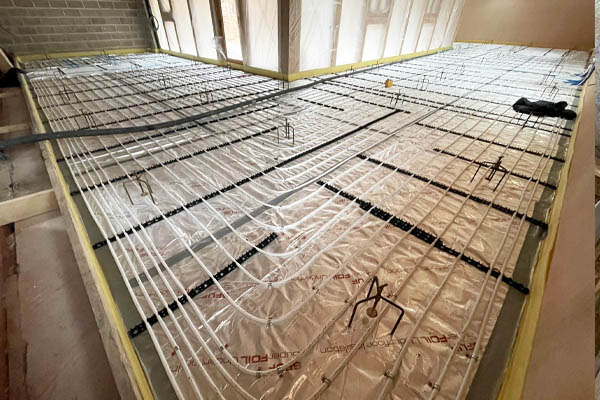
Underfloor Heating Systems Explained clearly answers one key question: which system is right for your home or project? Underfloor heating delivers even, comfortable warmth while improving efficiency and freeing wall space. However, system choice depends on property type, budget, and long-term goals.
This guide breaks down the options so you can make an informed, confident decision.
What Is an Underfloor Heating System?
An underfloor heating system warms a space from the floor upwards.
How Underfloor Heating Works
Heat spreads evenly across the floor surface. As a result, rooms feel comfortable at lower air temperatures. This improves efficiency and reduces cold spots.
Key System Components
Most systems include heating pipes or cables, insulation, controls, and a heat source. Correct design ensures balanced heat output and reliable performance.
Types of Underfloor Heating Systems Explained
Understanding system types helps narrow your options.
Wet Underfloor Heating Systems
Wet systems circulate warm water through pipes beneath the floor. They connect to boilers or heat pumps. Therefore, they suit whole-house heating and new builds.
Electric Underfloor Heating Systems
Electric systems use heating mats or cables powered by electricity. They install quickly and suit smaller areas such as bathrooms or kitchens.
Installation Options and Floor Types
Installation method plays a major role in system selection.
Screeded Underfloor Heating Systems
Screeded systems embed pipes in concrete or liquid screed. Because of the thermal mass, they deliver stable, long-lasting heat.
Retrofit and Overlay Systems
Retrofit systems sit above existing subfloors with minimal build-up. Consequently, they suit renovations and refurbishments with limited floor height.
Energy Efficiency and Running Performance
Efficiency is a major buying consideration.
Operating Temperatures and Efficiency
Underfloor heating operates at lower temperatures than radiators. As a result, it works efficiently with modern heat sources.
Comfort and Control
Zoning and smart controls allow room-by-room temperature management. This improves comfort while reducing unnecessary energy use.
How to Choose the Right Underfloor Heating System
Choosing correctly avoids costly mistakes.
Property Type and Usage
New builds often suit wet, screeded systems. Renovations usually benefit from retrofit solutions.
Professional Design and Support
Expert design ensures correct pipe spacing, output, and control strategy. Therefore, the system performs as intended for decades.
Understanding Underfloor Heating Systems Explained helps buyers focus on long-term value, not just upfront decisions.
FAQs – Underfloor Heating Systems Explained
What types of underfloor heating systems are available?
Wet and electric systems are the two main options.
Which system is best for new builds?
Wet underfloor heating is usually best for whole-house heating.
Are underfloor heating systems energy efficient?
Yes, they operate at lower temperatures than radiators.
Can underfloor heating be installed in existing homes?
Yes, retrofit and overlay systems suit renovations.
Do I need professional design?
Yes, proper design ensures efficiency and long-term reliability.
